


Founded in 2002, FDMT has built its reputation on supporting the development and well-being of children through educational resources, sensory tools, and learning materials. The Québec-based company serves both retail customers and institutional buyers — schools, clinics, and therapeutic centres — through a dedicated B2I (Business-to-Institution) channel, guided by a mission to promote the maximum development of every child. Its business model depends on operational autonomy, a strong customer experience across both channels, and the ability to scale without a proportional increase in complexity or cost.
Over time, FDMT's eCommerce platform no longer supported that model the way the business needed. Both B2I and DTC already ran on the legacy platform, integrated with the Microsoft Dynamics NAV ERP, but maintaining that environment had become expensive, and its cost kept rising without a matching return. More limiting still, the platform gave the team little autonomy: routine updates, product launches, promotions, and content changes all required external developers, and its rigid management experience made adapting to new needs slow and costly. For a company built on serving two channels well and growing steadily, the gap between what the business needed and what the platform allowed had become a constraint on growth.
FDMT chose Molsoft for its expertise in enterprise Shopify Plus migrations, custom ERP integrations, and unified B2B and DTC commerce architectures, with a focus on carrying the systems that run the business onto a modern platform through custom development rather than simply replatforming.
Since partnering with Molsoft on the migration and rebuild, FDMT has launched:
- A migration of both B2I and DTC commerce onto a modern Shopify Plus platform
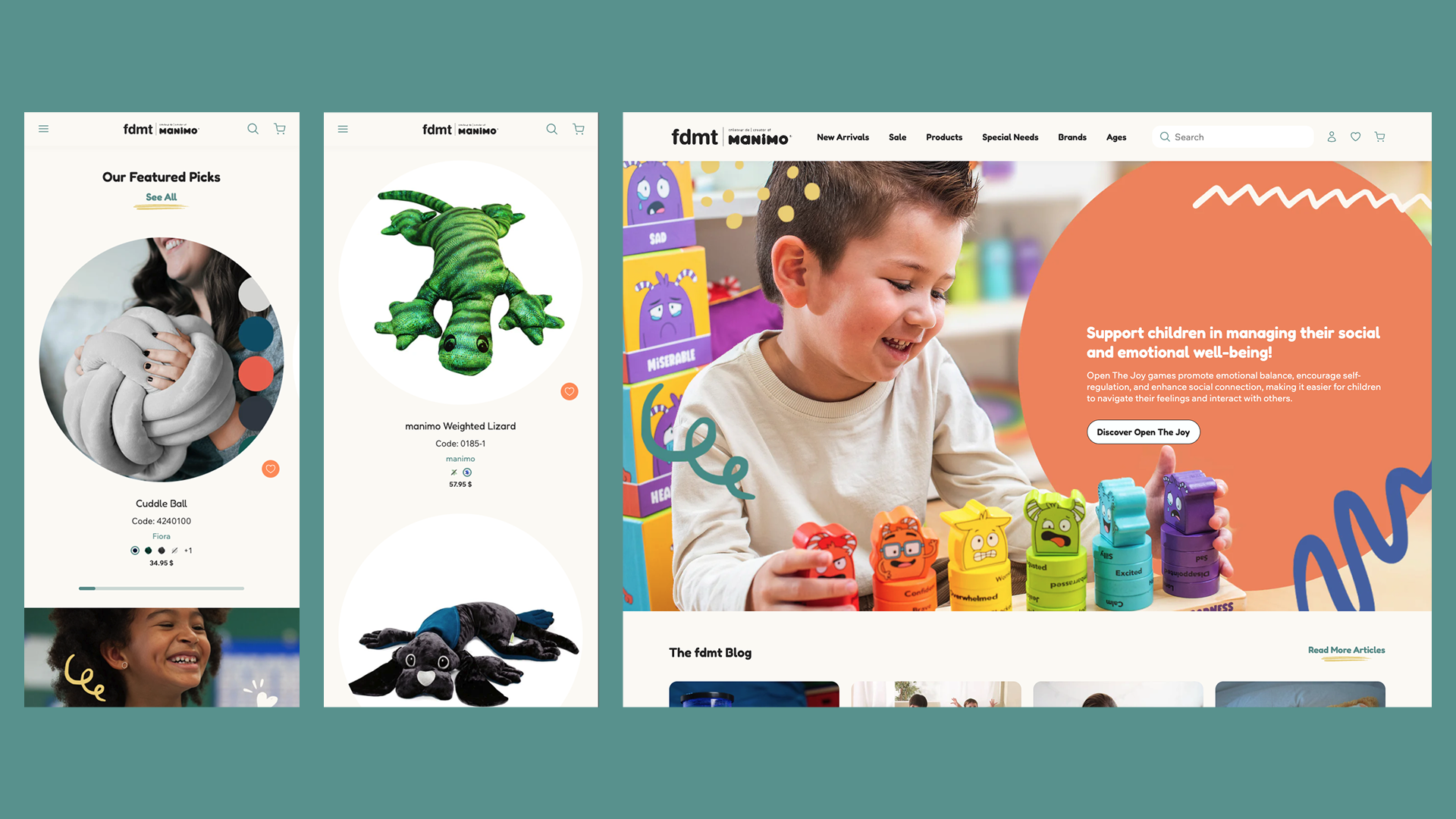
- A custom Shopify 2.0 theme rebuilt for guided B2I and DTC experiences within one storefront
- A custom-built connector carrying its Microsoft Dynamics NAV integration onto Shopify Plus
- A consolidated marketing setup, with 70K Klaviyo subscribers migrated onto a single platform
- A modular content architecture that gives internal teams direct control over the storefront
The Challenge: When a Legacy Platform Holds the Business Back
For FDMT, the challenge was not that its platform lacked capability. Both B2I and DTC ran on it, and the Microsoft Dynamics NAV integration kept products, inventory, orders, customers, and catalogues in sync. The problem was what that platform cost to run and how little the team could do with it. Maintaining the aging environment had grown expensive, and the return on that spend kept shrinking.
The deeper constraint was autonomy. Routine updates, product launches, promotions, and content changes all depended on external developers, so a company serving both retail and institutional customers couldn't move at the pace either channel demanded. The management experience was rigid: every adaptation to a new need meant another round of custom development and another cost, and the team had little ability to shape its own storefront day to day.
As FDMT looked to grow — more products, more institutional accounts, more activity across both channels — the legacy platform offered no realistic path to scale without significant further investment. A migration to Shopify Plus offered the way forward: a modern, flexible foundation with native B2B capabilities and a modular Shopify 2.0 theme system, giving the team room to manage and extend the storefront itself while carrying the existing B2I, DTC, and NAV setup onto a platform built for growth.

The Solution: A Custom Shopify Plus Build That Puts the Team in Control
Molsoft approached the engagement as a migration that had to preserve everything already working while giving the team more autonomy and flexibility to manage it day to day. The emphasis throughout was custom development: rebuilding FDMT's two-channel operation on Shopify Plus rather than settling for an off-the-shelf replatform.
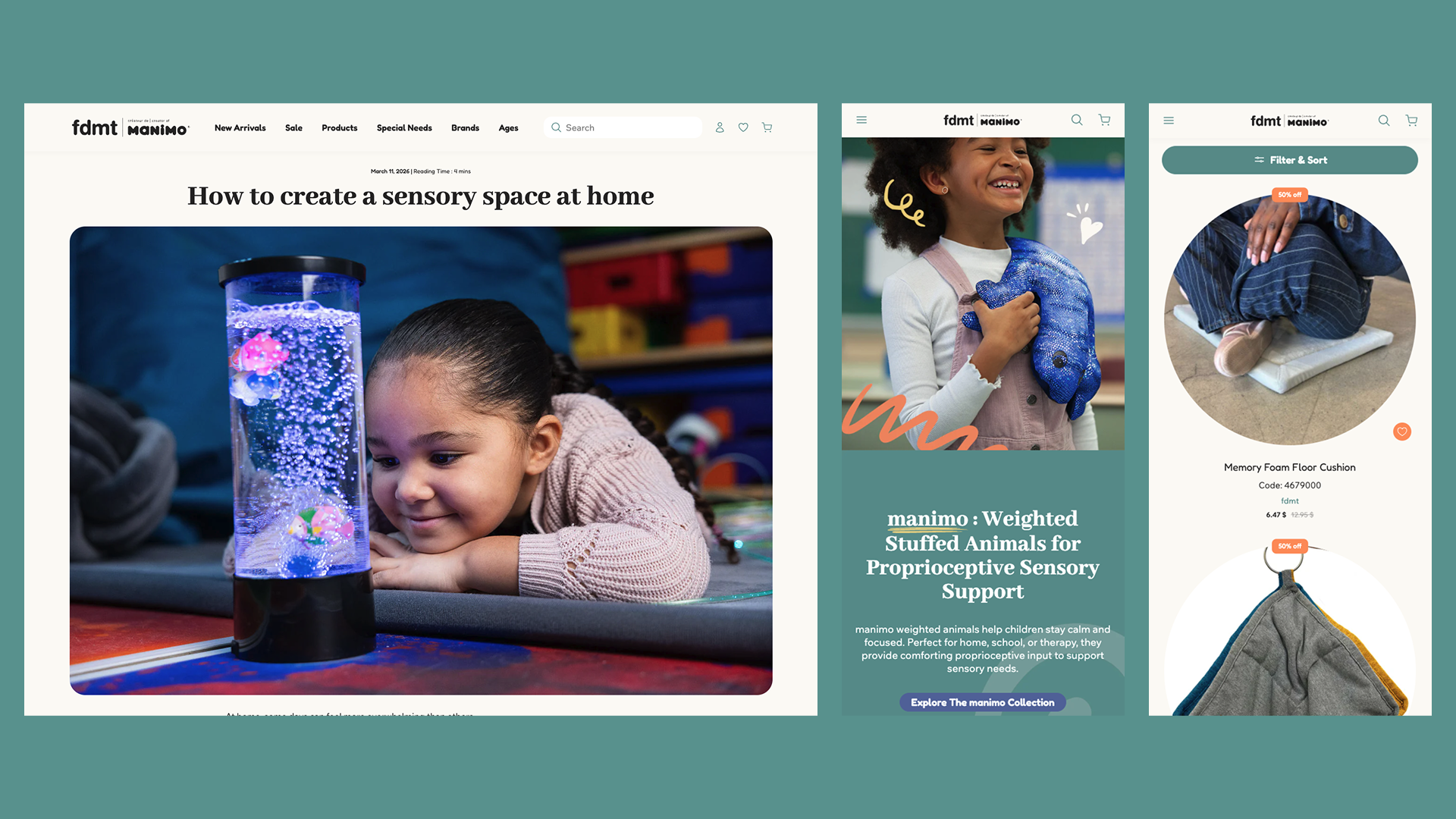
A custom Shopify 2.0 theme delivered FDMT's B2I and DTC experiences within one storefront, each with its own pricing logic, ordering workflows, and account behaviour. Institutional buyers kept company-level accounts with custom pricing catalogues, payment terms, and role-based permissions for self-serve ordering, while retail customers gained a modern, content-rich, bilingual (French/English via Shopify Markets) storefront. The difference was control: through Shopify 2.0's modular sections, the FDMT team can now update content, launch products, and run promotions without returning to developers for routine work.
The most technically involved part of the build was a custom connector between Microsoft Dynamics NAV and Shopify Plus, carrying FDMT's existing ERP integration onto the new platform. Products, inventory, orders, customers, and catalogues continue to sync automatically between the two systems, so the back-office system of record still drives both channels, now on a modern, flexible storefront rather than an aging one.
Around that core, Molsoft consolidated FDMT's email marketing through a Klaviyo migration covering the 70K-subscriber list, automated flows, and signup forms; integrated HubSpot for lead management; configured Intuitive Shipping for complex multi-zone rules; and migrated historical orders, customers, gift cards, products, collections, blog content, and coupons into the new environment without disruption.

Moving to Shopify Plus was an important step in modernizing our eCommerce environment and giving our team greater autonomy in how we manage the site day to day. Molsoft’s team worked closely with us throughout a complex migration, taking the time to understand our B2I and retail realities and the systems behind them. Today, we have a more flexible foundation that we can continue to evolve as our business and our customers’ needs change.
Karine Gagner, Owner, fdmt
The Results: A Platform the Team Can Run and Grow
Following the migration, FDMT runs its full two-channel operation on Shopify Plus while preserving the core capabilities the business relied on. B2I and DTC both live on the modern platform, and the Microsoft Dynamics NAV integration continues through the custom connector, keeping the storefront and the back office aligned across both channels.
What changed most is the experience of running it. The team now manages content, promotions, and product launches itself, adapting the storefront through Shopify 2.0's modular sections without waiting on developers. The team now has greater autonomy over day-to-day storefront management, with more flexibility to update content, launch products, run promotions, and adapt the customer experience within Shopify’s ecosystem.
The platform also gives FDMT room to grow. New products, categories, and institutional accounts can be added on the same foundation, with the NAV connector keeping both channels in sync as the catalogue expands.
With a modern, flexible foundation in place, FDMT is positioned to deepen its digital capabilities across both B2I and DTC, with Molsoft continuing to refine the NAV connector flows and support ongoing development through a longer-term retainer, extending what the platform can do without adding complexity to how the business runs.


