








Middleware & Integrations

Connect Your Commerce Ecosystem

Integrate Shopify with your ERP, POS, CRM, and operational systems through a structured architecture that reduces fragility, improves data integrity, and supports long-term scalability.

Building the Right Integration Architecture

We architect integration layers that align Shopify with the operational systems powering finance, fulfilment, retail, and marketing. Not connectors configured in isolation. Infrastructure designed to hold up under real operational load.

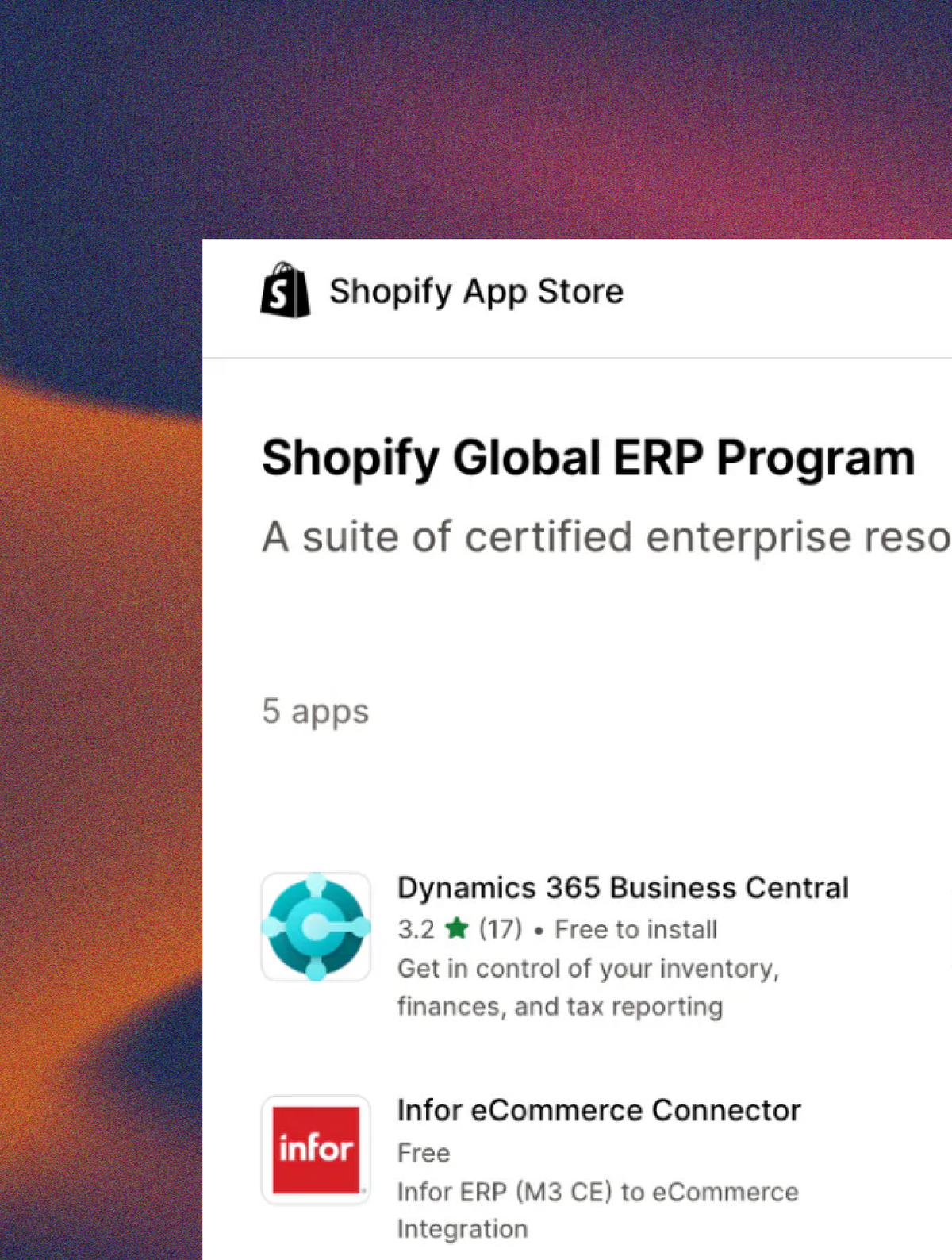
ERP & Accounting Synchronization

We connect Shopify with ERP and finance systems to align pricing, inventory, order data, and reporting logic across operational and financial workflows.

Middleware & Custom Connectors

We build custom middleware with orchestration layers, transformation logic, monitoring, and error handling designed to bridge Shopify with legacy ERPs, warehouse systems, and operational tools.

CRM & Marketing Alignment

Integrate customer and lifecycle data across Shopify, CRM, and marketing automation platforms to support cleaner segmentation, stronger personalization, and more reliable campaign execution.

iPaaS & Managed Connectors

We implement and manage iPaaS solutions when the integration landscape is well-defined and speed to production matters. When your systems require custom logic, orchestration, or data transformation, we architect custom middleware. The right approach depends on your systems, not our preference.

Omnichannel Infrastructure Support

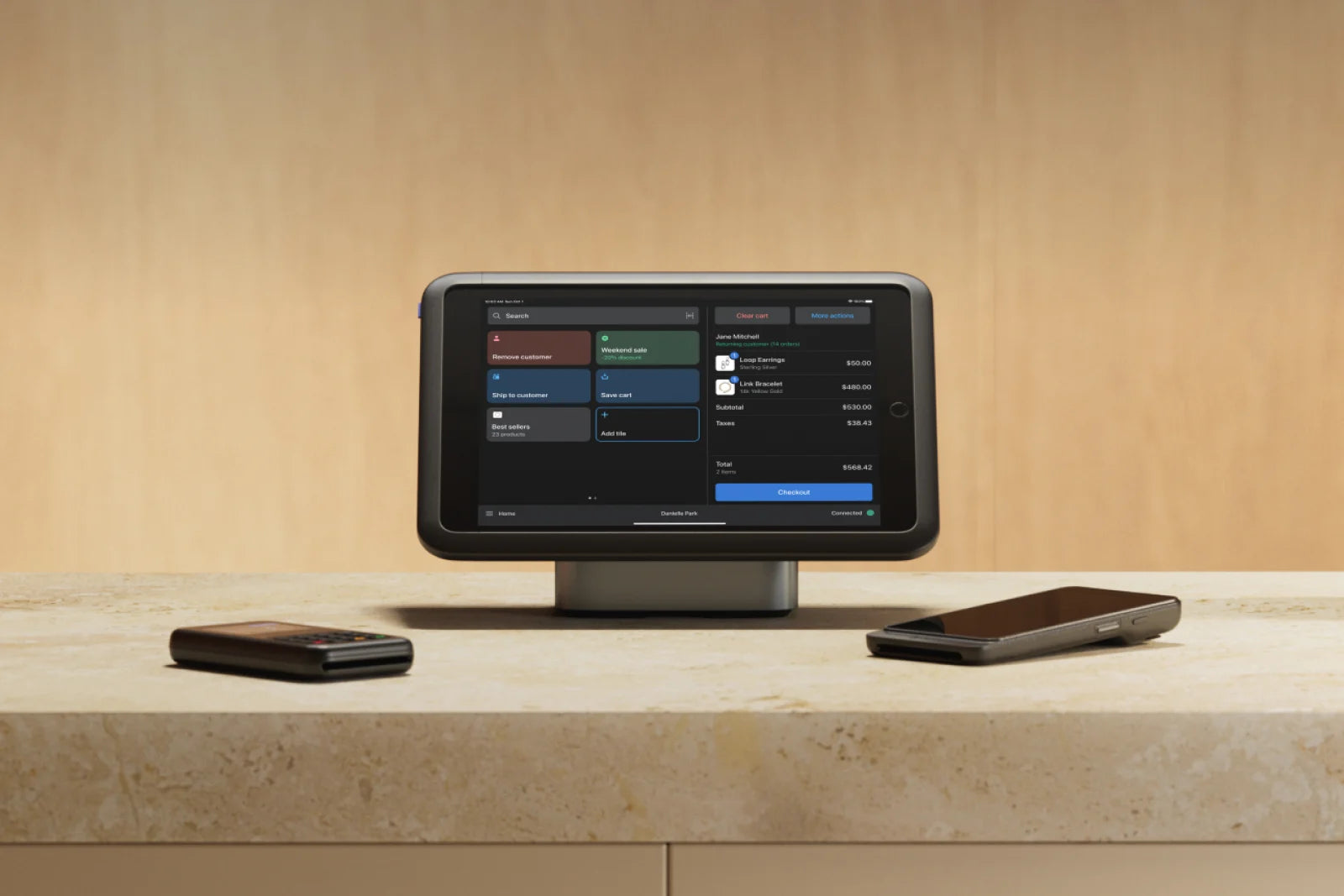
We build the integration layer that connects physical and digital systems together across POS, ecommerce, loyalty, and customer-facing touchpoints.

PIM & Product Data Management

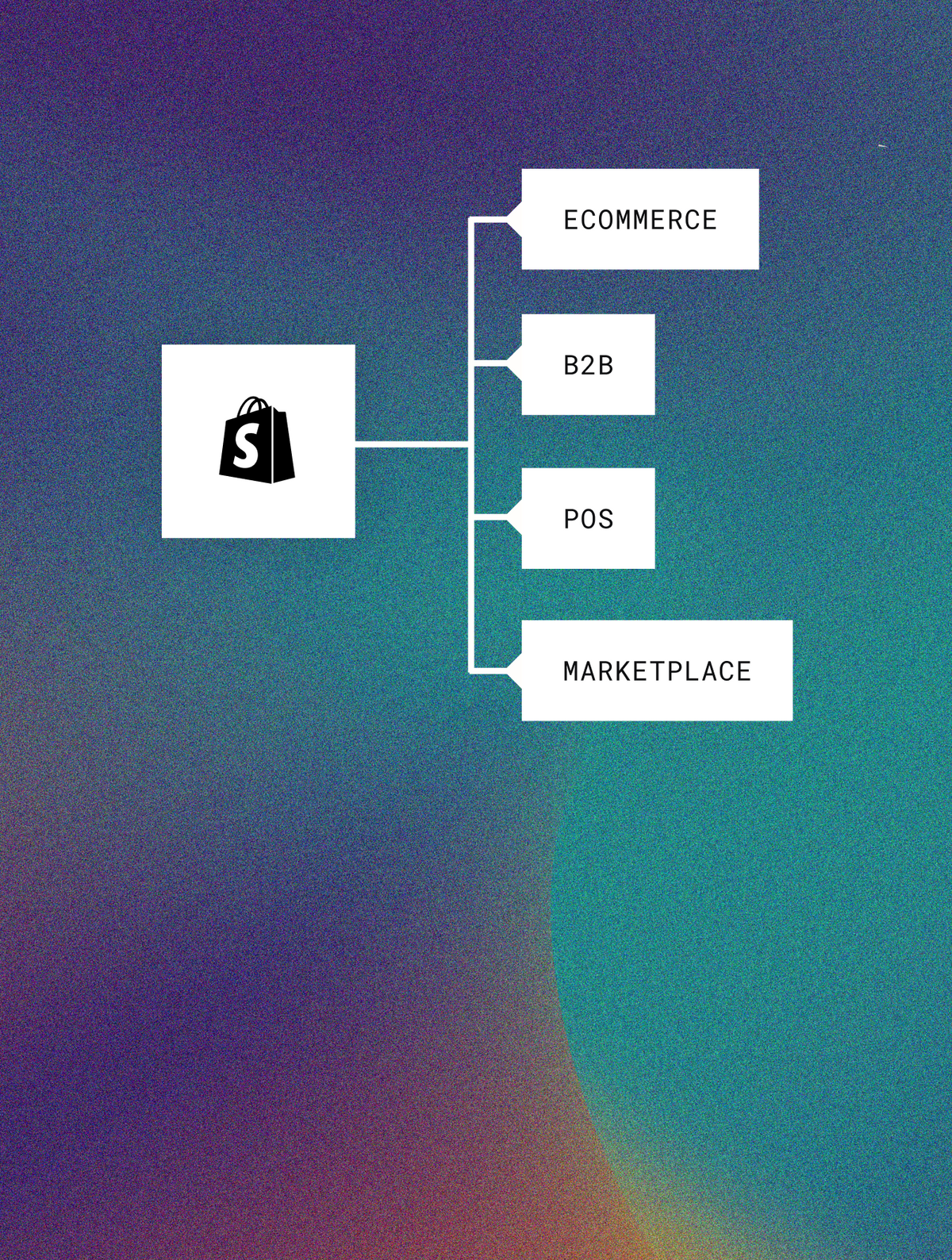
We integrate product information management systems with Shopify so your catalogue data is enriched in one place and distributed consistently across ecommerce, POS, B2B, and marketplace channels.

Integration Architecture Without System Sprawl

Your commerce ecosystem grows. Apps, platforms, middleware, and operational systems accumulate over time. At some point, this expansion creates more complexity than capability. Systems overlap. Logic gets duplicated. Data becomes harder to trust.

A move toward structured Shopify integrations becomes an opportunity to simplify that environment.

Integration architecture is not just about connecting platforms. It is about defining how systems should interact, where business logic should live, and how operational data should move without creating new fragility.

When that structure is missing, even functional integrations can create long-term risk.

A stronger integration model reduces unnecessary dependencies, improves system clarity, and gives your team more confidence in the data flowing across the business. The result is a commerce environment that is easier to maintain, easier to troubleshoot, and better prepared for future growth.

Middleware & Connector Strategy

Not every system should connect to Shopify in the same way. Some environments can rely on direct integrations. Others require middleware to manage orchestration, transformation logic, monitoring, and operational control.

Middleware becomes especially important when enterprise commerce relies on systems that were not designed to communicate cleanly with one another. ERP, POS, OMS, WMS, CRM, and gift card platforms often operate on different data models, timing logic, and ownership rules. Without a structured approach, those differences create operational drift.

A well-designed middleware strategy lets you:

  • Reduce tight coupling between systems
  • Isolate business logic outside the storefront
  • Improve visibility into synchronization issues
  • Support phased modernization across legacy environments
  • Replace fragile scripts and one-off connectors
  • Create a more maintainable integration layer over time

The objective is not to introduce more infrastructure than necessary.It is to build the right control layer for the systems that matter most.

Systems We Integrate

We architect and implement integration layers across the full enterprise commerce stack.

ERP & Finance

We integrate Shopify with the back-office systems that govern pricing, inventory, order data, and financial reporting. These are the integrations where data ownership and synchronization logic matter most.

Oracle Netsuite

Oracle Netsuite

Dynamics 365 F&O

Dynamics 365 F&O

Salesforce

Salesforce

Acumatica

Acumatica

Sage

Sage

SAP Business One

SAP Business One

Fulfilment & Product Management

We connect Shopify with the systems that manage your product data, warehouse operations, and order fulfilment across channels and locations.

Akeneo

Akeneo

Salsify

Salsify

Pimcore

Pimcore

Brightpearl

Brightpearl

The Molsoft Method

Every Shopify integration project follows a defined execution framework designed to reduce risk and align commerce systems with operational workflows.

Discovery & Alignment

We audit your current architecture, integrations, workflows, and data ownership before defining integration scope to reduce implementation risk and prevent misalignment between systems and operations.

We audit your current architecture, integrations, workflows, and data ownership before defining integration scope to reduce implementation risk and prevent misalignment between systems and operations.

Read more Read less

Architecture & Design

We design the integration architecture: which systems own which data, how records synchronize, where business logic lives, what the middleware layer handles, and how errors are caught and resolved.

We design the integration architecture: which systems own which data, how records synchronize, where business logic lives, what the middleware layer handles, and how errors are caught and resolved.

Read more Read less

Build & Integration

We build on Shopify’s native capabilities first — webhooks, APIs, Flow triggers, and supported connectors. Where your systems require custom middleware, transformation logic, or structured orchestration, we engineer it.

We build on Shopify’s native capabilities first — webhooks, APIs, Flow triggers, and supported connectors. Where your systems require custom middleware, transformation logic, or structured orchestration, we engineer it.

Read more Read less

Growth & Optimization

Launch is not the finish line. We monitor synchronization health, track error rates, review data integrity across systems, and adapt the architecture as your operations evolve. When you add a new system, open a new channel, or change a workflow, the integration layer adapts with it.

Launch is not the finish line. We monitor synchronization health, track error rates, review data integrity across systems, and adapt the architecture as your operations evolve. When you add a new system, open a new channel, or change a workflow, the integration layer adapts with it.

Read more Read less

Featured capability

Omnichannel Gift Card Infrastructure

We build gift card integrations that connect Shopify to external gift card systems without breaking the customer experience across online and in-store channels. Our team has experience with Givex, AnyCard, and custom system implementations designed to support seamless redemption, balance visibility, and cross-channel compatibility. 

  • Real-time balance synchronization
  • Physical and digital gift card support
  • Shopify POS and ecommerce compatibility
  • Multi-location and multi-currency support
  • Structured integration with external gift card providers 

Built for merchants with more complex gift card environments. Not just app configuration. System architecture.

Selected Integration Projects

Our Shopify integration work spans multi-brand retailers, unified retail operations, and high-volume ecommerce environments that require a structured, scalable integration architecture.

View all work View all work

Selected Integration Projects

Our Shopify integration work spans multi-brand retailers, unified retail operations, and high-volume ecommerce environments that require a structured, scalable integration architecture.

Home & Garden
Trévi

Molsoft migrated Trévi from Magento to Shopify Plus with 35 Shopify POS terminals across 9 stores and ERP integration, driving 162% revenue growth.

Health & Beauty
Marcelle

Molsoft migrated Groupe Marcelle from Magento to Shopify Plus, unifying 4 brands with a custom ERP integration and driving 32% sales growth.

Education
HEC

Molsoft migrated HEC Montréal ED to Shopify Plus with Oracle PeopleSoft ERP and Salesforce CRM integrations, driving 14% AOV and 6% conversion growth.

Structure Your Integrations With the Right Shopify Integration Partner

If you are connecting Shopify to ERP, CRM, POS, or legacy systems, define the right architecture before new dependencies create more operational risk.

Contact Us

Structure Your Integrations With the Right Shopify Integration Partner

If you are connecting Shopify to ERP, CRM, POS, or legacy systems, define the right architecture before new dependencies create more operational risk.

Explore other expertise areas

Explore how we approach migration, POS, and B2B commerce across the Shopify Plus ecosystem.

Explore other expertise areas

Explore how we approach migration, POS, and B2B commerce across the Shopify Plus ecosystem.

Custom middleware is required when operational logic exceeds native Shopify capabilities or when legacy systems require structured bridging.

It becomes especially useful when multiple systems need coordination, transformation logic, monitoring, or a shared control layer that standard apps cannot provide cleanly.

Yes. Shopify can integrate with ERP platforms through direct connectors, middleware, or custom API-based architecture, depending on the system landscape and operational requirements.

Typical ERP integration scope includes:

  • Product and catalogue synchronization
  • Inventory availability updates
  • Pricing and customer-specific terms
  • Order and fulfillment data flow
  • Financial and reporting alignment

The more important question is not whether integration is possible, but how to structure data ownership and synchronization logic to support operational continuity.

Data duplication is usually an architecture problem, not a platform problem.

Prevention starts by defining which system owns each dataset and how records are created, updated, and synchronized across the environment.

A structured integration framework typically includes:

  • Clear source-of-truth definitions
  • Data mapping before the build begins
  • Rules for record creation and overwrite behaviour
  • Validation across real operational workflows
  • Monitoring and error handling for sync failures

Without that structure, even technically functional integrations can create reporting drift and inconsistent customer or order data.

Most gift card problems are not caused by the card itself. They happen when balances, redemption logic, and channel behaviour are not aligned across ecommerce and store systems.

Our implementations focus on:

  • Maintaining a single balance across channels
  • Supporting both digital and physical card formats
  • Integrating directly with POS and ecommerce systems
  • Preserving compatibility across multi-location environments
  • Reducing operational risk in complex gift card ecosystems

That is why we treat gift card infrastructure as a systems problem, not a plugin setup task.

Long-term maintainability depends on architectural discipline.

That means designing integrations with visibility, documentation, clear ownership, and room for change as systems evolve.

We maintain integrations by focusing on:

  • Transparent architecture rather than black-box logic
  • Clear business rules and data ownership
  • Structured monitoring and stabilization
  • Ongoing refinement as workflows change
  • Reducing unnecessary custom complexity wherever possible

The objective is not just to make integrations work at launch. It is to make sure they remain reliable as the business grows.

Yes. Shopify can be integrated with CRM and marketing automation platforms to support cleaner customer data flows, segmentation logic, lifecycle communication, and campaign reporting.

When structured correctly, these integrations reduce duplication and help teams work from more consistent customer records.

No. Many integrations can be handled through Shopify-native capabilities or supported connectors.

Custom development becomes necessary when the business requires more control over synchronization logic, operational workflows, legacy systems, or system behaviour than standard tools can provide.

Integration projects usually fail when architecture decisions are made too late or when systems are connected without enough governance.

Common causes include:

  • Unclear data ownership
  • Duplicated business logic across systems
  • Weak validation before launch
  • Over-reliance on brittle middleware
  • Poor visibility into synchronization failures
  • No long-term plan for maintainability

The issue is rarely the API itself. It is usually the structure around it.

Usually, when systems begin creating operational drag.

Common signals include:

  • Repeated manual corrections across systems
  • Inventory, order, or customer data mismatches
  • Reporting inconsistencies
  • Growing middleware complexity
  • Slow implementation cycles for operational changes
  • Too many dependencies that no one fully owns

At that point, the issue is no longer just integration. It is structural architecture.