Walk into most enterprise marketing teams and you'll find the same picture: a calendar dominated by weekly campaign sends, a creative team buried in last-minute reviews, and an automation architecture that hasn't been seriously audited in over a year. That picture is upside down. According to Klaviyo's own benchmark data, automated flows generate roughly 30% of total email revenue from less than 5% of total sends, out-earning campaigns on a per-recipient basis by a factor of three to five. They are, by any honest measure, the highest-margin asset in the entire email stack. They are also the most consistently neglected.
The economics of flows versus campaigns
A campaign is a moment. A flow is a system.
A campaign goes out, performs against its segment for a few days, and then it's done. The team measures opens, clicks, attributed revenue, and moves on to the next send. Whatever insight the campaign produced gets folded into the next briefing or, more often, forgotten.
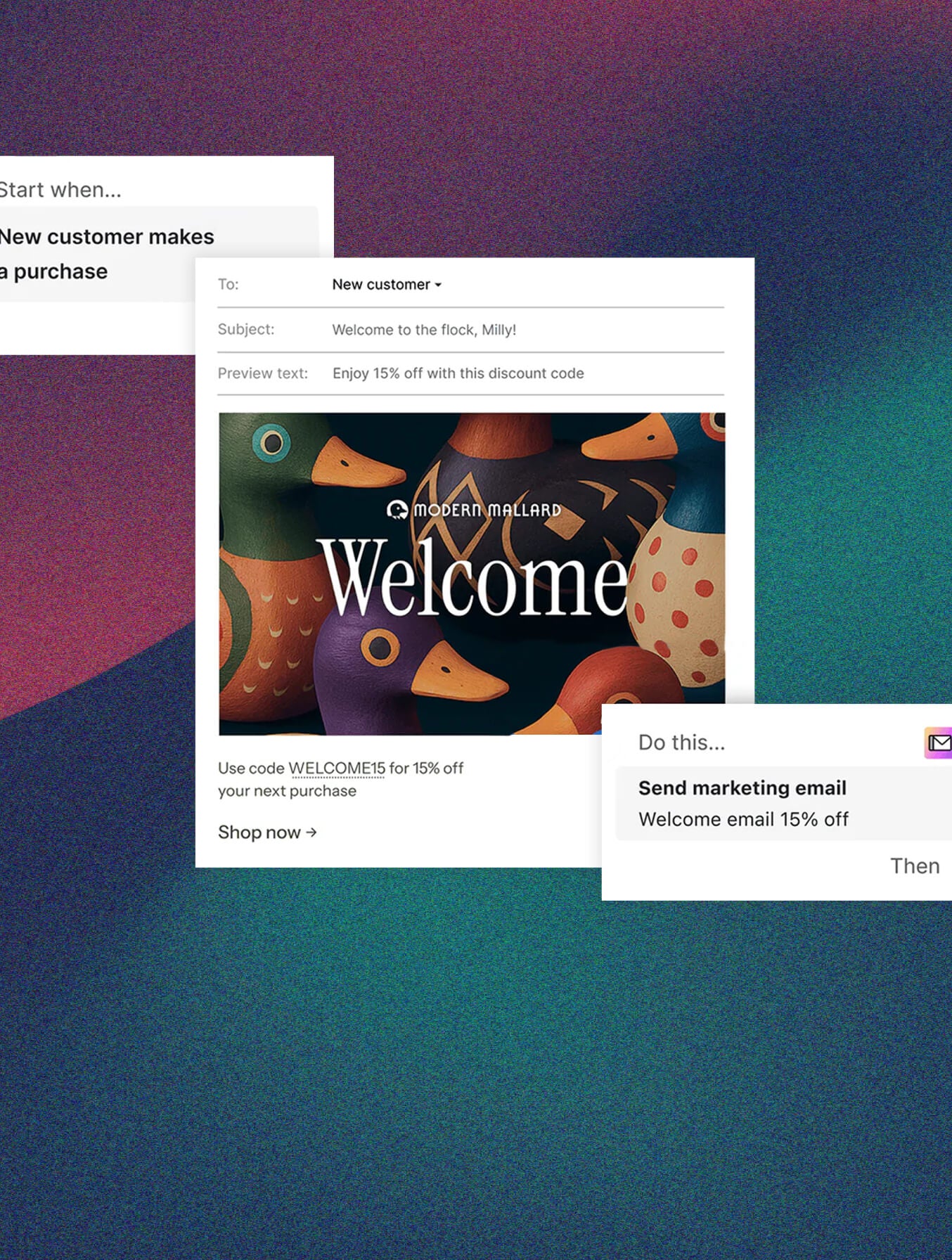
A flow, by contrast, runs continuously. Every new subscriber moves through the welcome series. Every abandoned cart triggers a recovery sequence. Every post-purchase customer enters a nurture path. The revenue from these flows doesn't show up as a spike on a single day, it shows up as a steady baseline that grows quietly as the audience grows. That's why per-recipient flow revenue dwarfs campaign revenue, and why an optimization made to a flow today continues paying out for months.
The implication is straightforward: the marginal hour spent improving a high-traffic flow is worth substantially more than the marginal hour spent producing another campaign. Most teams have the allocation backwards.
Why flows decay (and why nobody notices)
Flows feel finished once they're live. Welcome series: built. Abandoned cart: built. Browse abandonment, post-purchase, replenishment, win-back, VIP: built. The team checks the integration, confirms revenue is attributing, and moves on. Campaigns demand attention every week. Flows don't ask for any.
But flows decay quietly. Triggers break when site code changes. Segments stop matching the catalog as products are added and retired. Discount codes expire and aren't replaced. Subject lines that performed in Q1 fatigue by Q3. Deliverability drifts as engagement patterns shift. Featured products go out of stock. Brand voice updates roll out everywhere except the automation layer. Tier logic written against last year's customer base no longer matches this year's behavior.
None of this generates an alert. It just generates lost revenue, line by line, week by week. By the time it shows up in a quarterly review, several months of compounding losses have already been booked.
The compounding case for flow optimization
The math of flow optimization is one of the cleanest in marketing.
A 10% lift on a single campaign sends a one-time bump — useful, but bounded by the size of that send. A 10% lift on a welcome flow compounds across every new subscriber for as long as that flow is live. If a brand adds fifty thousand subscribers a year, that lift continues paying out across all of them. The same logic applies to abandoned cart, browse abandonment, post-purchase, and replenishment flows. Each one is an annuity, and each optimization extends the annuity.
This is one of the few areas in marketing where the work done today keeps paying off months and years from now. But it only works if someone is doing the work.
What a managed flow program actually looks like
A serious flow program isn't a one-time build. It's an operational discipline that looks much closer to how mature paid-media teams operate than how most email teams do.
It starts with a baseline: every flow gets a documented performance benchmark — open rate, click rate, conversion rate, revenue per recipient — measured monthly. Drift gets flagged early. Underperforming steps get diagnosed: is it a content problem, a timing problem, a deliverability problem, or a segmentation problem?
It continues with structured experimentation. The highest-traffic flows — welcome and abandoned cart, for most brands — get continuous A/B testing on subject lines, send timing, content blocks, and incentive logic. Smaller flows get periodic audits and refreshes tied to seasonal and merchandising cycles.
And it connects to the rest of the business. The team running flow optimization needs a live feedback loop with merchandising on what to feature, with creative on brand voice and visual standards, and with customer service on what objections to address in nurture. A flow disconnected from the rest of the organization gets stale fast.
The role of flows in a unified commerce strategy
For enterprise brands operating across stores, channels, and geographies, automated email isn't just a marketing tactic. It's connective tissue. It's how a customer who visited a physical store gets re-engaged digitally. It's how a wholesale buyer gets nurtured between purchases. It's how a returning customer gets surfaced the right product at the right moment based on prior behavior.
When the rest of the commerce stack is unified — POS connected to ecommerce, inventory visible across channels, customer profiles consolidated — flows become enormously more powerful. They can trigger off in-store purchases, reflect real-time inventory, and personalize against behavior across the entire customer journey. The brands extracting the most value from Klaviyo aren't running it as a standalone email tool. They're running it as the automation layer of a unified commerce system. That requires both the technical foundation to feed flows with rich data, and the operational discipline to keep them tuned as the business evolves.
The reframe
Stop thinking of flows as setup work. Start thinking of them as a portfolio of revenue-generating assets. Welcome, abandoned cart, browse, post-purchase, replenishment, win-back, VIP — each is an asset with its own contribution, its own performance trend, and its own decay curve. Manage them like a portfolio, and Klaviyo stops being an email tool and starts being a revenue channel.
Most brands are still using it like a megaphone.